: Neo-Nature :
- The Inspiration
This piece was inspired by a period of my life when I worked as a mechanic on the construction of Plopsaqua in Belgium. About a year into the project, the decoration team arrived and started transforming the construction site into a fantasy landscape. Metal frameworks were built around pools, walls, and structures, then covered with foam concrete and sculpted into rocks, trees, mushrooms, statues, and all kinds of natural and fantasy-inspired forms.
Watching this process had a big impact on me. I became fascinated by how something completely artificial could slowly be transformed into something that felt alive and natural. I spent a lot of time talking with the artists, asking questions, and observing their techniques whenever I had the chance. For a short period I even considered applying to their company, although I quickly decided to continue my own path instead.
Years later, I finally decided to experiment with these techniques myself. This artwork is the result of that curiosity. It was never intended as a professional project or a finished design. Instead, it became an opportunity to learn, experiment, and discover what could emerge from a collection of simple materials, imagination, and patience.
- The Process
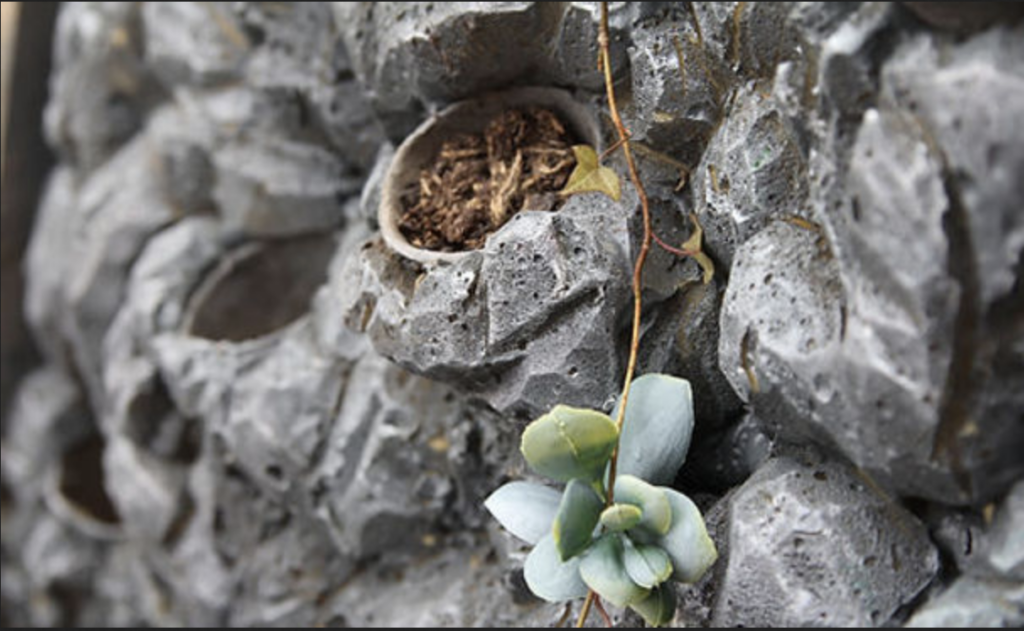
The piece was constructed inside a large wooden frame and combines expanding foam, paint, real plants, dried moss, and small stones to create an artificial landscape. The frame was built as an experiment rather than a permanent installation, something that would eventually reveal both its strengths and weaknesses. While the landscape itself survived for years, the untreated wooden frame slowly deteriorated from exposure to weather and moisture.
The process began by creating a supporting structure behind the frame using plastic sheeting, fencing material, and wooden supports. Expanding foam was then applied throughout the structure, forming the foundation of the landscape. At this stage the shapes were deliberately rough and uncontrolled. The real work would begin during carving.
After the foam had cured, I spent roughly a week carving and shaping the surface. Using knives, spatulas, wire, and various improvised tools, I gradually transformed the foam into cliffs, rocks, and natural formations. During this process I studied photographs of geological formations and rock structures, not to copy them exactly, but to understand their language and recreate their feeling. I wanted the landscape to feel believable while still allowing room for imagination and fantasy.
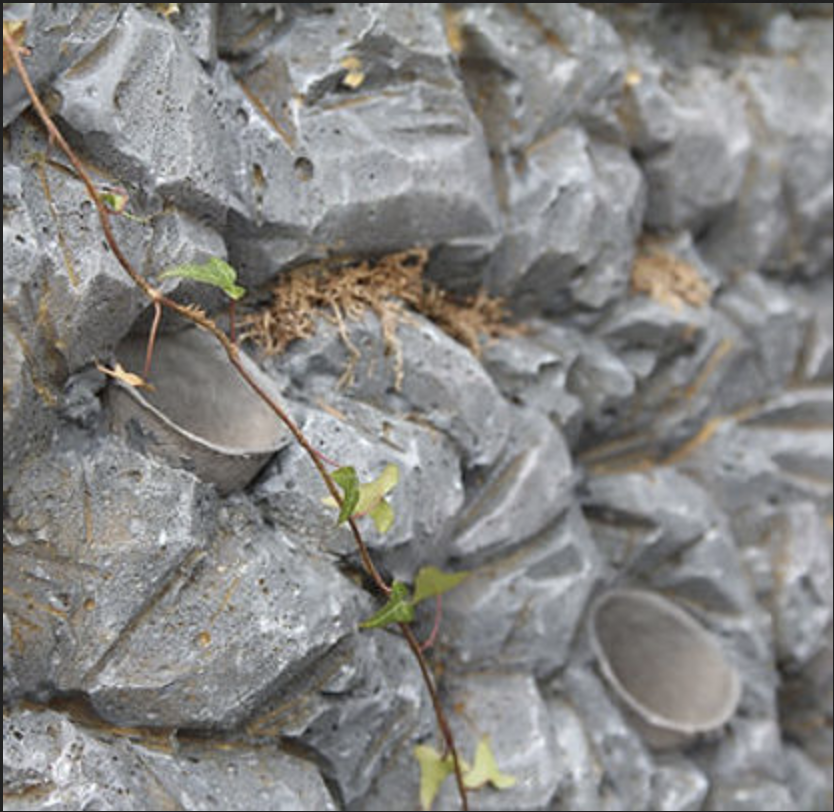
Once the carving was complete, multiple layers of primer were applied to seal the foam and strengthen the surface. This helped fill small imperfections left by the foam while also protecting it from moisture. The painting process followed, using different colours, brushes, textures, and techniques to create depth, wear, shadows, highlights, and subtle variations. In some areas crackle paint was used to create additional texture and ageing effects. A final protective coating sealed the entire surface.
The final stage involved introducing natural elements into the artificial landscape. Plants were placed into hidden containers integrated into the structure, while dried moss and small stones were added to blend the boundary between the constructed and the organic. The combination of living and artificial materials became one of the most interesting aspects of the piece.
Although the artwork no longer exists, I consider the project a success. It survived for several years, taught me a great deal about materials and techniques, and confirmed my fascination with the relationship between nature and imitation. If I create a new version in the future, it will likely be smaller and structurally improved, with better protection for the frame and a drainage system integrated into the planting areas.